 Sira KeySira Key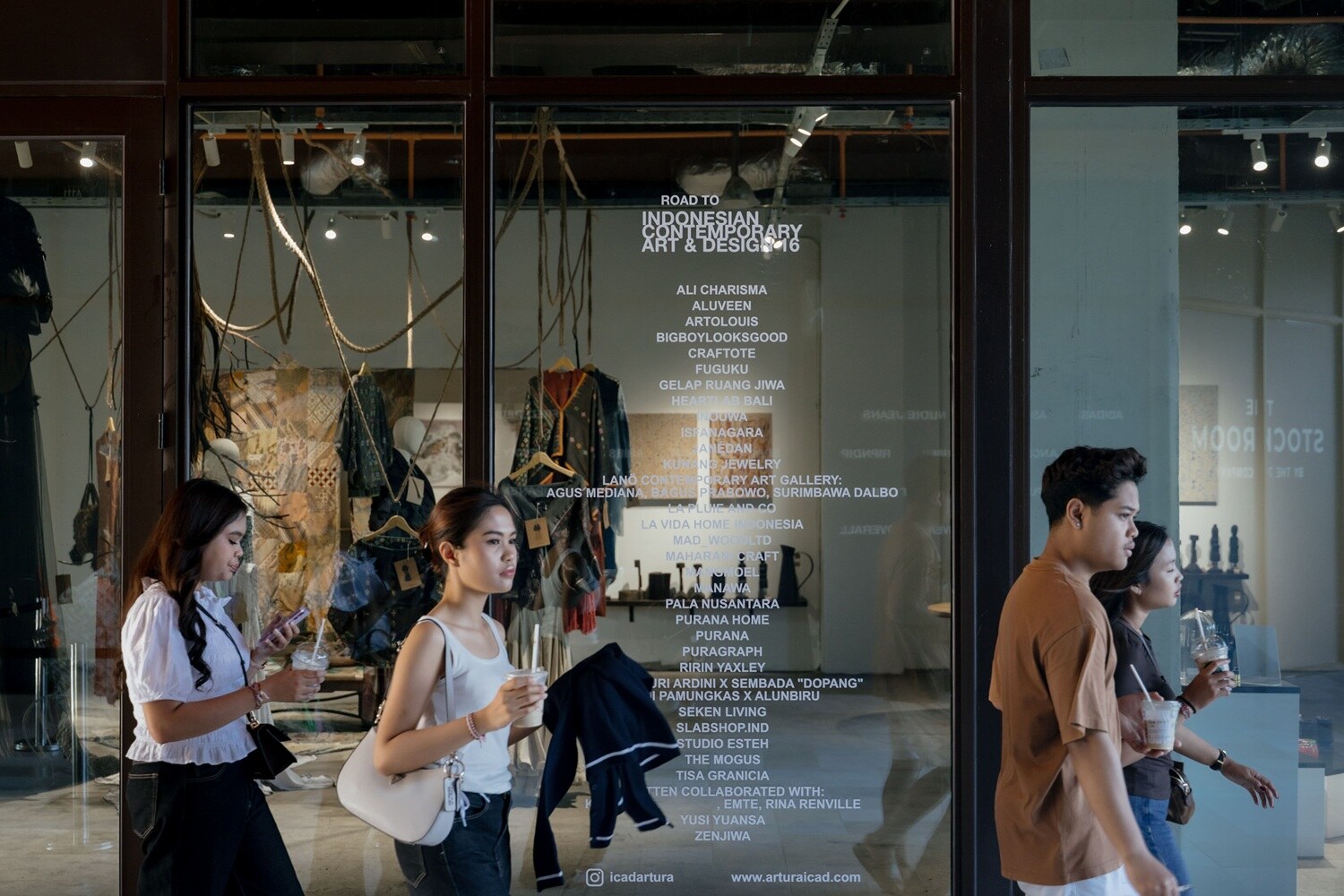
What does contemporary Indonesian creativity look like
today? The answer is not always found inside a traditional gallery.
Sometimes, it appears in an unexpected material. A familiar
object transformed into something entirely new. A piece of furniture that
carries a cultural memory. A work that questions how we live, what we consume,
and how we relate to the world around us.
This is where Indonesian Contemporary Art & Design
(ICAD) comes in.
For more than a decade, ICAD has created a platform for
artists, designers, and creative practitioners to explore the space between
art, design, culture, and everyday life. Throughout its journey, ICAD has
presented more than 500 art and design works, collaborated on more than 150
programmes, and welcomed millions of people into conversations around
contemporary creativity.
But perhaps the most interesting thing about ICAD is not
simply the number of artists, works, or programmes.
It is the idea behind it.
Contemporary art can sometimes feel distant — something to
be viewed from a few metres away, discussed in a gallery, and then left behind.
ICAD approaches creativity differently.
By bringing together art and design, it creates a space
where ideas can become objects, experiences, materials, and conversations. The
boundaries between what is considered “art” and what belongs to everyday life
become less obvious.
A chair can become a statement.
A material can tell a story.
A familiar cultural reference can be reinterpreted through a
contemporary lens.
And an everyday object can suddenly make you stop and think.
This openness is part of what makes ICAD compelling. It does not ask audiences to be art experts before they enter. Instead, it creates opportunities to simply look, wonder, question, and discover.
Indonesia has never been short of creative traditions.
Across the archipelago, generations have developed
distinctive approaches to craft, architecture, textiles, materials, objects,
and visual culture. Contemporary Indonesian artists and designers are now
taking these layers of heritage and placing them in conversation with the
realities of today.
That conversation is where things become interesting.
Rather than simply looking backward, contemporary creativity
can ask what happens when tradition meets technology, when craftsmanship meets
new materials, or when cultural identity encounters a rapidly changing world.
ICAD has become one of the platforms where these questions
can be explored.
And this year, that conversation is finding a new setting in Bali.
For visitors to Bali, the opportunity to encounter ICAD
comes in a rather unexpected place.
At Sira Village, the exhibition brings Indonesian
contemporary art and design into a destination already shaped by shopping,
dining, lifestyle, and the island's atmosphere.
Located on the Ground Floor, the exhibition invites visitors
to encounter the works naturally — perhaps while exploring the destination,
meeting friends, or simply spending an afternoon in Bali.
There is no need to make the experience overly formal.
Take your time.
Look closer.
Read the stories behind the works.
And allow yourself to discover something you were not necessarily looking for.
There is another reason to look closely.
Selected works and design pieces presented at the exhibition
are available to discover and purchase.
That changes the relationship between visitor and artwork.
Instead of simply seeing something and walking away, you may
find a piece that stays with you, visually, emotionally, or even physically.
Perhaps it is an artwork that changes the atmosphere of a
room.
Perhaps it is a design object that introduces a piece of
contemporary Indonesian creativity into your everyday life.
Or perhaps it is simply something you did not know you were looking for until you saw it.
Bali has long been a place where art, craft, nature, and
culture intersect.
ICAD adds another perspective to that story.
Here, contemporary Indonesian creativity is not presented as
something separate from the world around it. It becomes part of a wider
experience — one that moves between culture, design, lifestyle, and discovery.
So, the next time you find yourself at Sira Village, don't
only look at what is in the storefronts.
Look a little closer.
Because sometimes the most interesting discoveries in Bali are not the ones you planned to find.