 Sira KeySira Key
A shopping destination is easy to measure by what people buy. A community is harder to count, as it lives in who keeps coming back, who you run into without planning to, and which corners slowly fill with familiar faces. Sira Village, opening 31 July 2026 at Kura Kura Bali near Serangan, is built with that second measure in mind. It treats retail as the doorway rather than the whole point, and shapes a genuine community lifestyle bali around the people who use the space day to day, not just the ones passing through with a purchase.
Most retail spaces ask you to arrive with a reason and leave once it is done. Sira Village works the other way around. The open layout invites people to simply be present, with room to sit, talk, and pass time without spending a rupiah.
That openness matters because belonging cannot be sold. By keeping its shared areas free and unhurried, the village becomes a public commons where students, families, and elders all have an equal claim to the space. Time spent here is the point, and the shopping that happens around it is a bonus rather than the entry fee.
The appeal of shopping is naturally part of the experience. As Bali’s first and biggest shopping outlet, Sira Village brings together authentic premium brands with outlet prices of up to 70% off all year long. But the experience extends beyond the stores, with dining, open spaces, events, and community activities creating reasons to stay longer.
Sitting inside a special economic zone built for creative industries, Sira Village has room to do more than host global labels. It also gives Indonesian makers and designers a real stage, with Alun Alun Indonesia and IDP Select offering visitors an opportunity to discover the country’s diverse creativity alongside international brands.
IDP Select is a curated retail concept bringing together a selection of prominent Indonesian and Bali-based brands, including Jenggala, Nata Oka, Uluwatu, Lily Jean, Tropisia, and others. From handcrafted ceramics and homeware to fashion, resort wear, textiles, and contemporary lifestyle pieces, the collection reflects the different ways Indonesian design continues to evolve.
Alongside IDP Select, Alun Alun Indonesia celebrates the richness of Indonesian craftsmanship and heritage through a selection of locally made products, connecting visitors with traditional artistry, cultural objects, and contemporary interpretations of Indonesian design.
This is where the value of outlet shopping in Bali meets something more local. The same foot traffic that comes for international brands also discovers a woodcarver, a weaver, or a young label from Denpasar. For these makers, visibility is the real reward, turning a retail floor into a launchpad for homegrown talent.
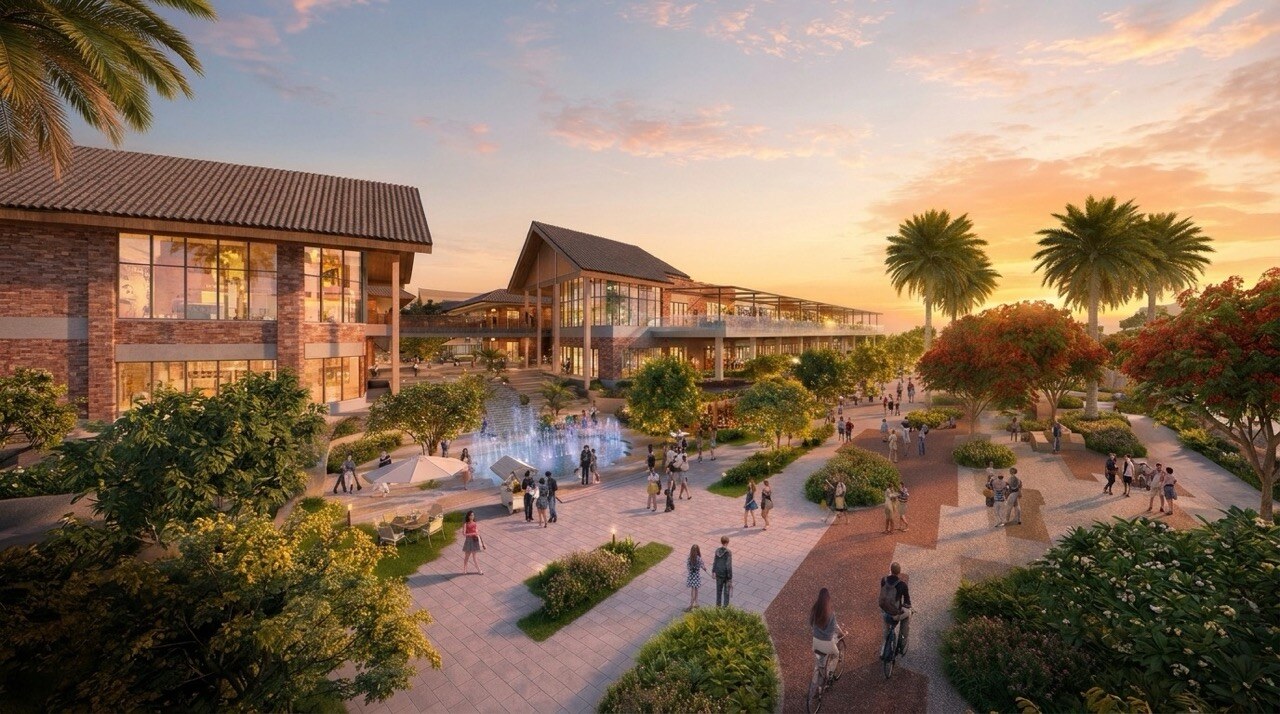
Sira Village organises events simply to attract visitors. Sira Village takes a more community-focused approach, creating events and activities that encourage people to come together and participate. Festive Plaza provides a dedicated space for performances, workshops, markets, celebrations, and other community activities, giving local residents and groups a place to share their ideas and talents.
The result is programming that feels owned rather than booked. A neighbourhood collective might run a craft session one week, a local music circle the next, and a seasonal celebration after that. Because the people attending are often the people organising, the calendar stays alive and reflective of who actually lives nearby.
A real community is measured by who it brings together. Sira Village is laid out so that children, parents, grandparents, long-time residents, and recent arrivals share the same ground at the same time, rather than splitting into separate crowds. A playground sits within sight of shaded seating, so a grandparent can rest while a child runs, and a teenager can drift through without anyone feeling out of place.
Small daily rituals do the quiet work here. An evening gathering as the heat fades, a regular weekend stroll, a familiar bench by the water; these repeated moments are how strangers slowly become neighbours. Over time, the village stops feeling like a destination and starts feeling like a place people belong to.
Community is not only about who gathers, but about shared values. Set within Kura Kura Bali, an estate developed around the Balinese philosophy of Tri Hita Karana, harmony between people, nature, and spirit, Sira Village, as part of that estate, inherits a duty to steward its surroundings rather than just a tenant on the land.
That responsibility extends to livelihoods and habits. Local hiring keeps opportunity close to home, giving nearby families a real stake in the place. Sira Village also follows a 'Second Life' philosophy, the developer's term for extending the lifecycle of quality goods through year-round outlet pricing, which encourages people to buy more thoughtfully. These shared commitments bind people together around something larger than the next purchase.
Strip away the storefronts and what remains is the real ambition: a place where relationships, not transactions, set the tone. Sira Village succeeds not when a register rings, but when someone returns simply because the people and the atmosphere drew them back.
That is the quiet definition of a community lifestyle bali, and it is the standard the village sets for itself. In a market full of places designed to be visited once, that is what makes it worth returning to.
Yes. Festive Plaza that we called Sunset Mandala and the shared lawns are intended for community use, and local groups, schools, and collectives are encouraged to propose gatherings, performances, and markets of their own. Festive Plaza is equipped with a stage and event-focused facilities, making it the primary venue for larger community events throughout the year.
Many community sessions are designed to be free or low cost, since the goal is participation rather than profit. Specific workshops run by individual makers may carry a small materials fee.
The easiest way is to show up to a public event and connect with the people. Recurring markets and workshops are an open door for recent arrivals looking to meet people and find their footing.
Weekends carry the largest gatherings, but the space is built for everyday use, with smaller meetups, casual sessions, and quiet community moments unfolding on ordinary weekdays too.